
Education India
LeadSquared For Education
LeadSquared For Education
LeadSquared For Education
This is a case study of how we reduced ~44% of the initial implementation time for SMB Education Customers in India.
This is a case study of how we reduced ~44% of the initial implementation time for SMB Education Customers in India.
Service Design
Research
Project Overview
Project Overview
Project Overview
LeadSquared is a CRM platform widely used by Indian education institutions to manage enquiries, applications, and post-admission workflows. While the product was strong, the initial implementation experience for education customers was slow, fragmented, and heavily dependent on multiple back-and-forths between customers and the Professional Services (PS) team.
For small and mid-sized colleges—many of them new to CRMs—this led to confusion around requirements, delayed account handover, poor first impressions, and early churn during critical admission seasons.
This project focused on rethinking the implementation experience as a product problem, not just an operational one. By introducing standardized requirement collection, reusable configurations, and clear playbooks, we aligned customer expectations with PS execution early in the process.
LeadSquared is a CRM platform widely used by Indian education institutions to manage enquiries, applications, and post-admission workflows. While the product was strong, the initial implementation experience for education customers was slow, fragmented, and heavily dependent on multiple back-and-forths between customers and the Professional Services (PS) team.
For small and mid-sized colleges—many of them new to CRMs—this led to confusion around requirements, delayed account handover, poor first impressions, and early churn during critical admission seasons.
This project focused on rethinking the implementation experience as a product problem, not just an operational one. By introducing standardized requirement collection, reusable configurations, and clear playbooks, we aligned customer expectations with PS execution early in the process.
Problem Statement
Problem Statement
Problem Statement
Problem Overview
Problem Overview
LeadSquared’s CRM is predominantly used by a large segment of Indian educational customers, primarily small and medium-sized colleges, for lead management and single application management. Once a sales deal concludes, the implementation team (aka Professional Services), engages with customers to understand their needs and configure the account accordingly.
LeadSquared’s CRM is predominantly used by a large segment of Indian educational customers, primarily small and medium-sized colleges, for lead management and single application management. Once a sales deal concludes, the implementation team (aka Professional Services), engages with customers to understand their needs and configure the account accordingly.
Due to the lack of alignment on requirements from customers & PS team, customers get into multiple calls, multiple iterations which eventually delays the hand over of the account. This issue is compounded when customers, new to the CRM ecosystem, struggle to provide their needs in the context of LeadSquared. Such challenges result in customer dissatisfaction, delayed account handover, and ultimately leading to churn in initial few months.
Due to the lack of alignment on requirements from customers & PS team, customers get into multiple calls, multiple iterations which eventually delays the hand over of the account. This issue is compounded when customers, new to the CRM ecosystem, struggle to provide their needs in the context of LeadSquared. Such challenges result in customer dissatisfaction, delayed account handover, and ultimately leading to churn in initial few months.
The Business Problem
The Business Problem
The average MRR from these customers is approximately 30K (ARR~360K). The average timeframe to set up these accounts is about 21 days, at a standard rate of 8K per day, resulting in an implementation cost of around 160K. Customers are never willing to pay this huge implementation cost, where LeadSquared compromises on implementation cost and plans to recover that over a period of 2–3 years. But when customers are dissatisfied due to the delayed experience they had during the initial implementations they use the CRM for admission season (4–5 months) & unsubscribe the CRM.
An analysis of 97 accounts that discontinued service revealed that 14 of them identified delays in implementation and account handover as the leading cause of churn.
The average MRR from these customers is approximately 30K (ARR~360K). The average timeframe to set up these accounts is about 21 days, at a standard rate of 8K per day, resulting in an implementation cost of around 160K. Customers are never willing to pay this huge implementation cost, where LeadSquared compromises on implementation cost and plans to recover that over a period of 2–3 years. But when customers are dissatisfied due to the delayed experience they had during the initial implementations they use the CRM for admission season (4–5 months) & unsubscribe the CRM.
An analysis of 97 accounts that discontinued service revealed that 14 of them identified delays in implementation and account handover as the leading cause of churn.
The Research Journey
The Research Journey
The Research Journey
Research
Research
In order to identify gaps in the process, we conducted six interviews with Subject Matter Experts (SMEs) and the Professional Services (PS) team. My primary research objectives were focused on understanding two key areas:
What is current process for implementation?
What are the reasons behind delays in implementation?
In order to identify gaps in the process, we conducted six interviews with Subject Matter Experts (SMEs) and the Professional Services (PS) team. My primary research objectives were focused on understanding two key areas:
What is current process for implementation?
What are the reasons behind delays in implementation?
Real-time coordination
Real-time coordination
I also shadowed two live customer implementations, carefully noting each phase of the process from initial customer meetings, through configuration, to the eventual account handover. During these observations, I kept several key questions in mind:
What specific steps, sub-steps, and modules are involved in the implementation process?
How long does each step of the process take?
What approaches are used to implement various modules?
What challenges does the implementation team encounter at different stages, and how often do these occur?
How are these challenges currently addressed and resolved by the team?
What is the overall duration of the implementation process, and does it align with the timelines promised to customers? If not, what are the discrepancies?
Are there any notable observations or systemic issues contributing to gaps in the process, such as delays caused by billing or sales departments?
I also shadowed two live customer implementations, carefully noting each phase of the process from initial customer meetings, through configuration, to the eventual account handover. During these observations, I kept several key questions in mind:
What specific steps, sub-steps, and modules are involved in the implementation process?
How long does each step of the process take?
What approaches are used to implement various modules?
What challenges does the implementation team encounter at different stages, and how often do these occur?
How are these challenges currently addressed and resolved by the team?
What is the overall duration of the implementation process, and does it align with the timelines promised to customers? If not, what are the discrepancies?
Are there any notable observations or systemic issues contributing to gaps in the process, such as delays caused by billing or sales departments?
Learnings
Learnings
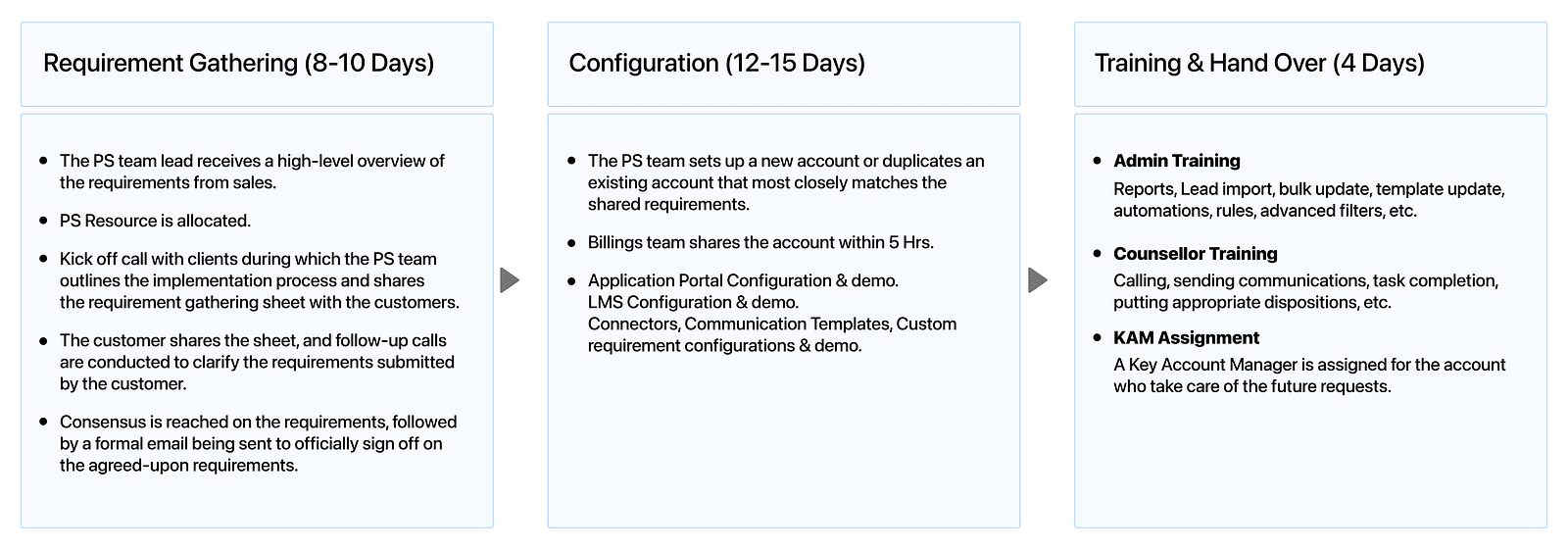
The existing implementation process is outlined as below-
At the initial requirement gathering phase the customers are provided with a Requirement Gathering Sheet (RGS) which consist of very limited questions to know about their requirements and workflows.
Customers also take their own time to understand & fill up the RGS. The requirement gathering through RGS is currently taking around 8 to 10 days on an average.
While compiling this information there are lot of gaps as they miss out few details.
Implementation team understands the RGS through multiple calls & uses the RGS for configuration, which is typically is covered in 5 to 7 days.
Then there is Customer sync ups & iterations, as many times configurations do not fully meet the customer use cases. This takes typically more than 7 days.
Furthermore, custom developments, depending on their complexity, can take upwards of 15 days to complete, adding to the overall duration of the implementation process.
The existing implementation process is outlined as below-
At the initial requirement gathering phase the customers are provided with a Requirement Gathering Sheet (RGS) which consist of very limited questions to know about their requirements and workflows.
Customers also take their own time to understand & fill up the RGS. The requirement gathering through RGS is currently taking around 8 to 10 days on an average.
While compiling this information there are lot of gaps as they miss out few details.
Implementation team understands the RGS through multiple calls & uses the RGS for configuration, which is typically is covered in 5 to 7 days.
Then there is Customer sync ups & iterations, as many times configurations do not fully meet the customer use cases. This takes typically more than 7 days.
Furthermore, custom developments, depending on their complexity, can take upwards of 15 days to complete, adding to the overall duration of the implementation process.
Problem Identifiaction
Problem Identifiaction
The primary reasons for higher implementation times include:
“At the beginning of our engagement with customers, there is a misalignment between the customer’s expectations and the understanding of these expectations by our LeadSquared team”
“Additionally, the absence of predefined standard solutions for customer needs contributes to the problem.
Customers are not fully informed about the standard solutions we offer”
The primary reasons for higher implementation times include:
“At the beginning of our engagement with customers, there is a misalignment between the customer’s expectations and the understanding of these expectations by our LeadSquared team”
“Additionally, the absence of predefined standard solutions for customer needs contributes to the problem.
Customers are not fully informed about the standard solutions we offer”
The Solution
The Solution
The Solution
To address this problem, we have devised a standard configuration strategy for targeted Indian Education customers which has following components:
To address this problem, we have devised a standard configuration strategy for targeted Indian Education customers which has following components:
Education Template
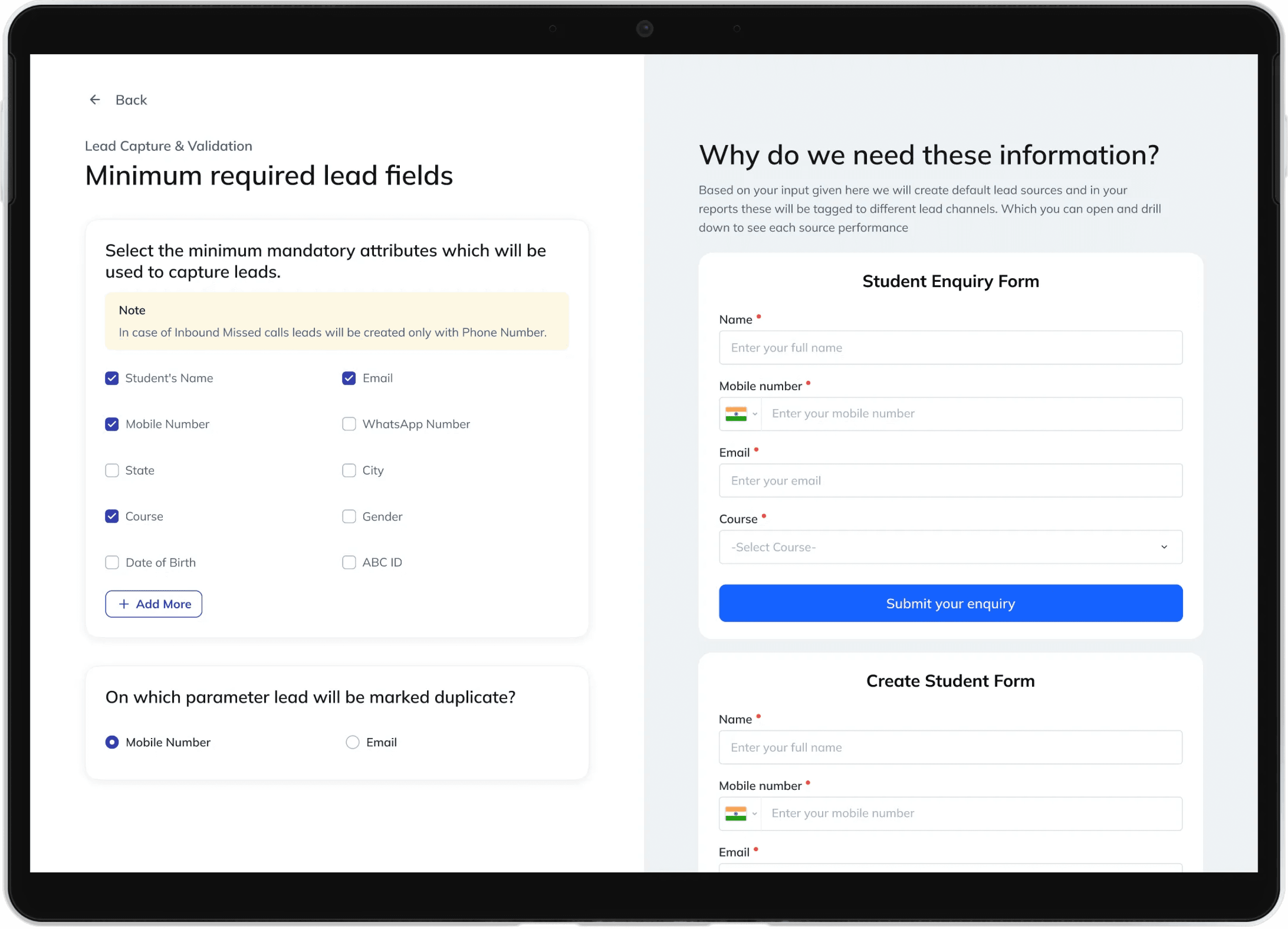
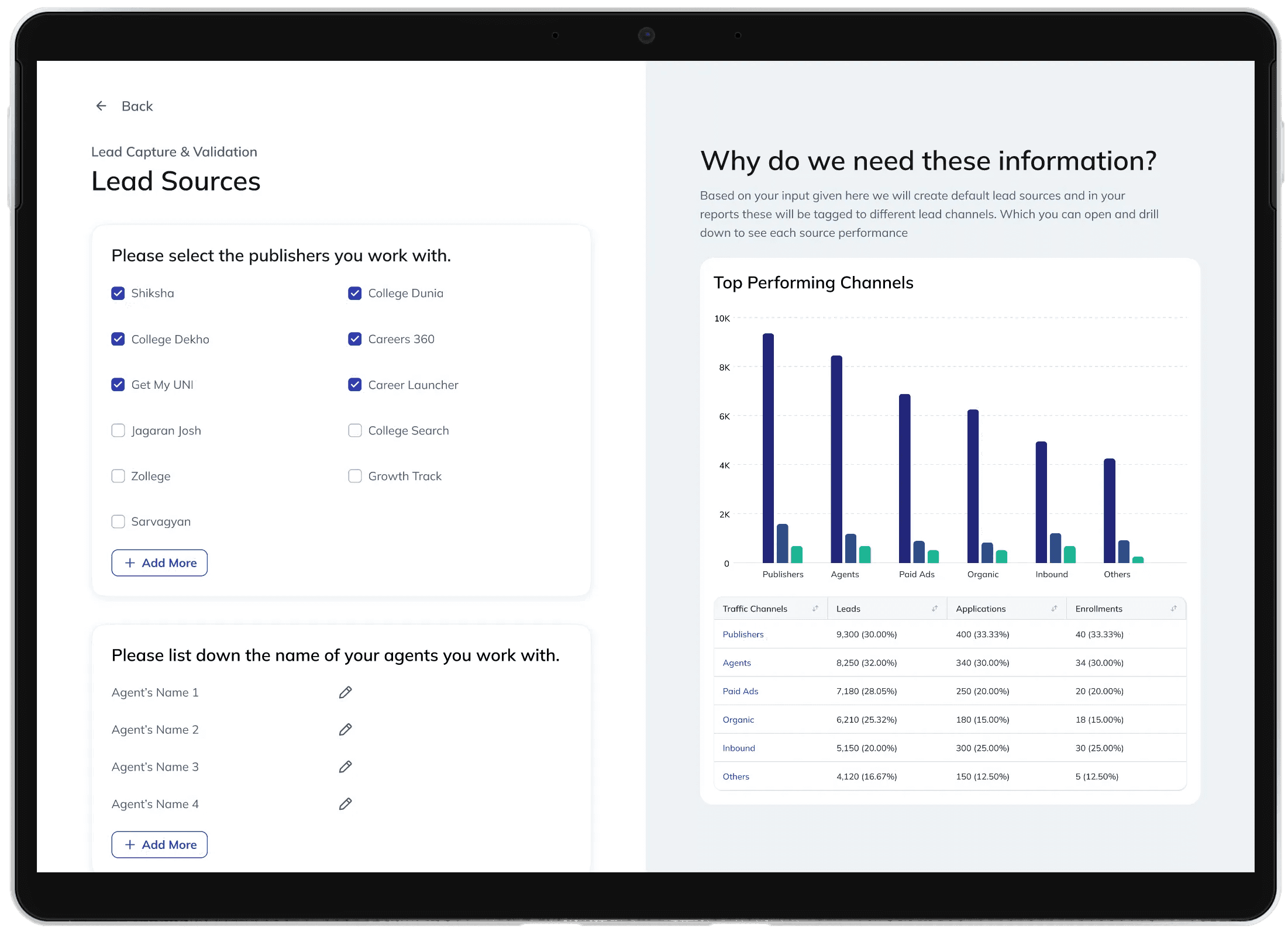
Essentially a structured requirement collection sheet, allows customers to cherrypick the features they need. This Requirement Gathering Sheet (RGS) will then be utilised by the PS team for quicker client configuration.
Standard Configuration: Serves as a ready-to-use library, enabling the PS team to activate the modules outlined in the RGS.
Essentially a structured requirement collection sheet, allows customers to cherrypick the features they need. This Requirement Gathering Sheet (RGS) will then be utilised by the PS team for quicker client configuration.
Standard Configuration: Serves as a ready-to-use library, enabling the PS team to activate the modules outlined in the RGS.
Playbook
Designed to instruct the PS team on the utilisation of the RGS and the application of the pre-defined configurations.
Designed to instruct the PS team on the utilisation of the RGS and the application of the pre-defined configurations.
Checklist
That details if any modifications are made to the predefined configurations, the areas affected by these changes, and whether these adjustments have been appropriately addressed.
That details if any modifications are made to the predefined configurations, the areas affected by these changes, and whether these adjustments have been appropriately addressed.
Education Template
Education Template
Key considerations made during creating this template-
To address instances where customers might be uncertain about how to complete the Requirement Gathering Sheet (RGS), the RGS was designed to reflect the typical admission procedures used in colleges and universities.
Aware that the terminology used by the Professional Services (PS) team is familiar within LeadSquared but may be alien to customers, the RGS was structured with questions framed as use cases. This approach allows customers to identify and select the configurations most relevant to their needs more easily.
Understanding that customers new to the CRM ecosystem might be unaware of the best practices for achieving higher conversion rates, which could impact the type of information they provide on the DSG. To address this, the DSG includes suggestions on best practices and outlines the benefits of our processes. This enables the PS team to effectively communicate and explain these aspects during discussions.
Key considerations made during creating this template-
To address instances where customers might be uncertain about how to complete the Requirement Gathering Sheet (RGS), the RGS was designed to reflect the typical admission procedures used in colleges and universities.
Aware that the terminology used by the Professional Services (PS) team is familiar within LeadSquared but may be alien to customers, the RGS was structured with questions framed as use cases. This approach allows customers to identify and select the configurations most relevant to their needs more easily.
Understanding that customers new to the CRM ecosystem might be unaware of the best practices for achieving higher conversion rates, which could impact the type of information they provide on the DSG. To address this, the DSG includes suggestions on best practices and outlines the benefits of our processes. This enables the PS team to effectively communicate and explain these aspects during discussions.
Standard Configuration
Standard Configuration
It was essential to ensure that the included use cases in RGS are already set up within an account. This way, once a new deal is secured and the Professional Services team finishes gathering requirements, they can swiftly create a clone of the account and activate the necessary configurations.
Here is an example:
When developing this master account, several crucial considerations were taken into account:
Scalability of Configurations: The setup was designed to be scalable, allowing for easy adjustments to minor changes without significant effort.
Self-Service Capability: Recognizing that customers may be apprehensive about creating automations/rules due to the risk of configuration mistakes, and considering that consulting help documentation was not preferred, we facilitated this process through straightforward CSV uploads.
Minimising Custom Development: We identified areas requiring custom development and sought to address these needs using the account’s existing functionalities wherever possible
It was essential to ensure that the included use cases in RGS are already set up within an account. This way, once a new deal is secured and the Professional Services team finishes gathering requirements, they can swiftly create a clone of the account and activate the necessary configurations.
Here is an example:
When developing this master account, several crucial considerations were taken into account:
Scalability of Configurations: The setup was designed to be scalable, allowing for easy adjustments to minor changes without significant effort.
Self-Service Capability: Recognizing that customers may be apprehensive about creating automations/rules due to the risk of configuration mistakes, and considering that consulting help documentation was not preferred, we facilitated this process through straightforward CSV uploads.
Minimising Custom Development: We identified areas requiring custom development and sought to address these needs using the account’s existing functionalities wherever possible
Playbook & Checklist
Playbook & Checklist
To ensure the Professional Services (PS) team was well-versed in the configurations made and the established Standard Operating Procedures (SOPs), we developed a playbook tailored for PS. This playbook addresses three primary inquiries:
The appropriate method for utilising the Education Template.
Guidelines for executing configurations accurately.
Procedures for evaluating the impact on configurations when a customer requests custom modifications.
To ensure the Professional Services (PS) team was well-versed in the configurations made and the established Standard Operating Procedures (SOPs), we developed a playbook tailored for PS. This playbook addresses three primary inquiries:
The appropriate method for utilising the Education Template.
Guidelines for executing configurations accurately.
Procedures for evaluating the impact on configurations when a customer requests custom modifications.
Key Results
Key Results
Key Results
I participated in several of the initial implementations, where early on, I encountered some challenges with a few accounts where my involvement was limited. After reviewing the process for 3 months, here are the outcomes:
I participated in several of the initial implementations, where early on, I encountered some challenges with a few accounts where my involvement was limited. After reviewing the process for 3 months, here are the outcomes:
16 Accounts
Setup in 3 months
8 Days
Avg configuration time
5 Days
Quickest configuration time
15 Days
Highest configuration time
Ready to build something amazing?
I'd love to connect with you!
Ready to build something amazing?
I'd love to connect with you!
Ready to build something amazing?
I'd love to connect with you!